How to Manage Your Expenses When You're Overwhelmed with ADHD
If you're feeling overwhelmed by your expenses and you have ADHD, the usual advice to "just track everything" or "create a detailed budget" can feel impossible. The good news? You don't have to tackle everything at once. In fact, trying to do that is probably why you're overwhelmed in the first place.
Not All Expenses Are Created Equal
Here's something that most financial advice gets wrong: it treats all expenses the same. It's like assuming every plant in your garden needs the same amount of water, or that baking muffins requires the same approach as making a salad. Different things need different treatment.
The same is true for your expenses. When you try to manage everything at once with the same level of attention, it's no wonder you feel overwhelmed. Instead, you need to recognize that there are different types of expenses, and you can handle them differently.
How to get started
When you're overwhelmed, the best strategy is to pick one corner of the room to organize. It doesn't matter which corner you start with—what matters is that you start somewhere and keep going. Eventually, you'll have an organized room.
Your expenses work the same way. Here are two approaches you can choose from:
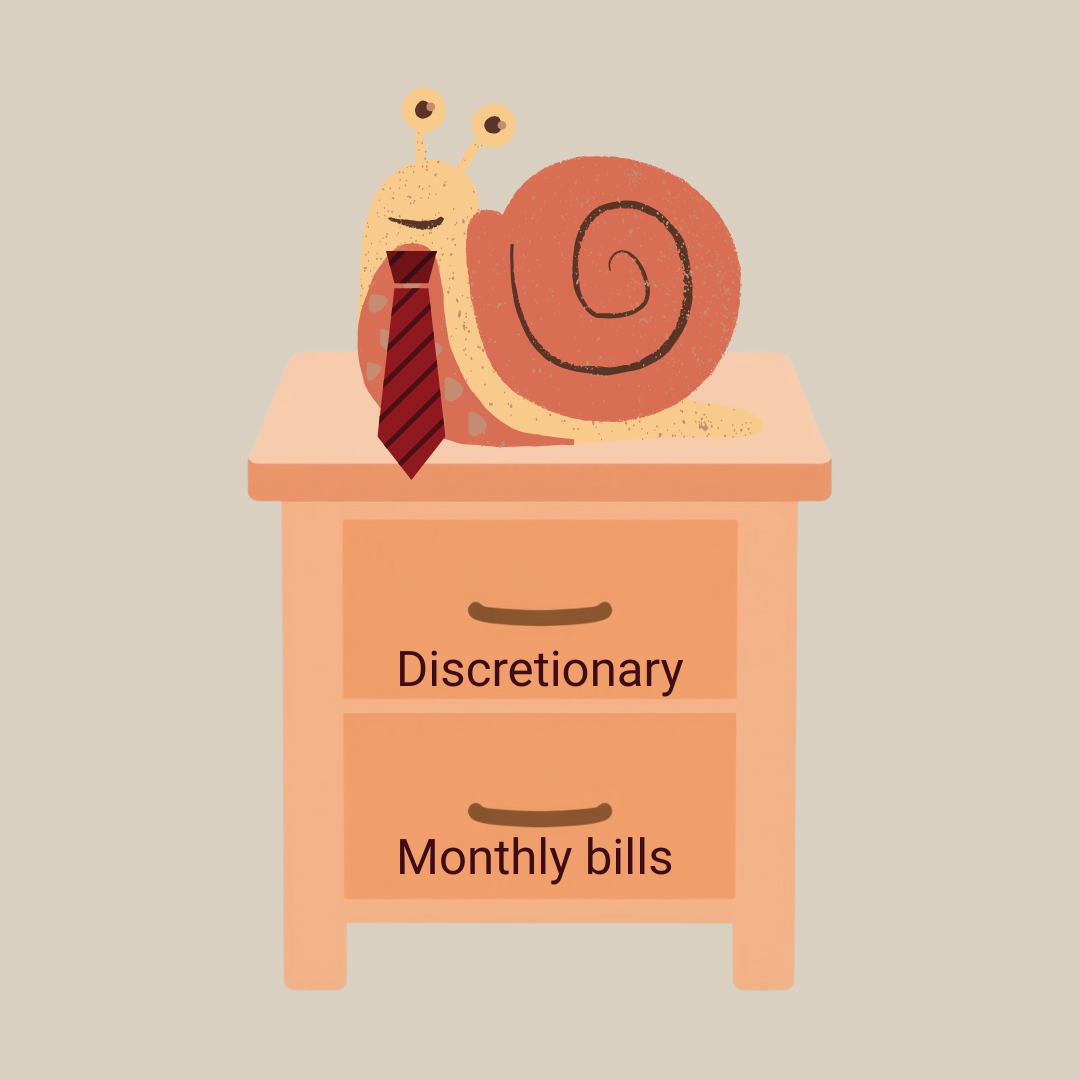
Approach 1: Start with Monthly Recurring Expenses
If you want predictability and quick wins, focus on your monthly recurring expenses first. These are the subscriptions, memberships, and services that charge you the same (or similar) amount every month.
Why start here? Because these expenses are consistent. They're not random. You can predict them, which makes them easier to manage when your brain craves that structure.
What to do:
List out all your monthly recurring expenses
Add them up to see the total
Decide which ones you want to keep, cancel, suspend, or negotiate
This gives you a baseline. Once you know what you're spending on recurring expenses every month, you've created a foundation to work from. You're not guessing anymore. And just like that you have taken a big step forward to manage your expenses.
Approach 2: Start with Discretionary Spending, or some of it
If monthly expenses feel too daunting or boring, start with discretionary spending instead. This includes things like eating out, shopping, entertainment—the stuff that varies from month to month.
Here's what's important: managing discretionary spending doesn't mean you have to stop having fun. It doesn't mean "now I cannot do anything enjoyable" or "I'm not going to spend any cents." That kind of restriction mindset doesn't work for most people, and it especially doesn't work if you have ADHD.
Instead, you're just separating discretionary from non-discretionary spending so you can see what's what. You're gaining awareness, not imposing punishment.
What to do:
Create less than 5 categories for discretionary based on what you get out of them.for example I do: Heath (and my grocery delivery subscription is there because that's mental health for me) !, giving, entertainment (mainly outings in my case), education (all things learning), and shopping.
Look at your discretionary spending without judgment. It is what it is, and what it is is good, this is the start of managing them.
Decide if there are any changes you want to make, top 3 per month.
The goal isn't perfection. It's visibility.
Pick Your Starting Point
The important thing is to choose one area and start there. Don't try to organize your entire financial life in one sitting. Pick monthly expenses or pick discretionary spending—whichever feels more doable right now—and work on just that section. You can even pick one of your 5 discretionary categories to work on first.
As you gain control of one area, you can move to the next. Just like organizing a room, it doesn't matter where you start. What matters is that you keep going.
Because you da manager, you da boss, you are walking around to discover what is your money up to.
The bottom line: Managing expenses when you're overwhelmed isn't about doing everything at once. It's about recognizing that different expenses need different approaches, choosing one area to start with, and giving yourself permission to take it one step at a time.
You don't need a perfect system. You just need a place to start.
